Jane

Jane Austen

Pre-pandemic, a friend and I took a day trip from London to Chawton, Jane Austen’s house. We traveled by train from London to Winchester and then boarded a bus but failed to hop off at the correct stop. Instead, we disembarked at the Chawton Roundabout and had to cross a terrifyingly busy two-way road. Yelling “Jane, here we come,” and moving at top speed we made it.

I remember Jane’s writing desk, a small oval tilt-top table. (Very small. A reproduction of the desk was in the Jane exhibit at the Morgan Library.) Chawton also displayed some modest family jewelry, letters, copies of Austin’s books and a charming kitchen. This house is where Jane Austen wrote, revised and published Sense and Sensibility, Pride and Prejudice, Mansfield Park, Emma, Northanger Abbey and Persuasion. For a virtual tour of Chawton click here: https://janeaustens.house/online-exhibition/virtual-tour-of-jane-austens-house/

Later that day we went to Winchester Cathedral where Jane is buried. She was forty-one when she died, possibly from Addison’s Disease, but no one is entirely sure of the cause of her death.


After Shakespeare Jane Austin is arguably the best-known author in the English language. As 2025 was the 250th anniversary of Austin’s birth, exhibitions abound. The Grolier Club in NYC has a delightful one, Paper Jane: 250 Years of Austen. (It runs through February 14, 2026.)

 The first section of the exhibit explores Austen’s early reputation that began when her first novel, Sense and Sensibility, was printed anonymously and at her own expense. (There are very few Austin first editions as readers in Jane’s era bound new books to match the rest of their libraries, probably the height of chic.)

Another part of the exhibition showcases literary works by Austen family members that include family histories and fan fiction. There are also Austen-related works such as Goodnight Mr. Darcy, a parody of the children’s classic, Goodnight Moon, and a book titled Pride and Prejudice in Space.


One section of the exhibit, “Pinking Austen,” recalls the 1960s when publishers appealed to women with budget paperbacks of literary classics, Austen’s among them.

From 1925 to 1975, many Austen works were featured on stage and screen. The 1940 film of Pride and Prejudice with Greer Garson and Lawrence Olivier was shown at the time when Americans were deciding whether to join Britain and its allies fighting against Hitler. Adrian, (aka Adrian Adolph Greenberg), who designed the women’s costumes, must have skipped his research as in the film the women wear hoopskirts reminiscent of the antebellum American South. Oops.

More Southern than Regency


Here is a Jane era recipe:


White Soup from Pride and Prejudice (attributed to Martha Lloyd who lived with the Austen ladies at Jane Austen’s House; in the novel Mr. Bingley mentions serving it at the Netherfield Ball.)


2½ quarts water (about 10½ cups)

2 chicken thighs

½ pound bacon (about 8–9 oz)

¾ cup white rice

1 anchovy or about ½ teaspoon anchovy paste

2-3 whole peppercorns

Thyme, bay leaf, and parsley (maybe ½ tsp thyme, one bay leaf, small bunch of chopped parsley)

2 small to medium onions, roughly chopped

2 celery ribs, roughly chopped

¼ pound ground sugared almonds (about 4 oz )

1 cup heavy cream

1 egg yolk


Directions:

In a large saucepan, simmer together the soup bones, water, chicken, bacon, rice, anchovies, peppercorns, herbs, onions, and celery, for two hours over a low flame.

Strain through a sieve into another large clean pot.

Let sit overnight in the fridge.

Next day skim the top of the broth to remove any scummy bits.

Add the ground sugared almonds and bring to a boil.

Strain through a sieve so it catches the almond pieces. (Lots of workouts for you and your sieve here.)

Mix together egg yolk and cream, stir into the soup, and serve.

Mr. Bingley notwithstanding, I rather doubt anyone plans to attempt this soup but it gives you an idea of Regency-style tastes. Better to offer a glass of Champagne, a cup of tea or any other drink and toast Jane. Enhance the experience with music popular in the Regency era –anything by Beethoven, Rossini, Liszt, or Mendelssohn will do beautifully.


Posted in Uncategorized | 4 Comments

Whan that Aprill with his shoures soote…

Geoffrey Chaucer

These are the first lines of the prologue of Chaucer’s The Canterbury Tales which I learned in high school. It’s interesting (though not surprising) that I remember them clearly although often can’t remember where I put my phone.

I’m taking a course at Hunter College in The Canterbury Tales (hereafter TCT) which I’ve always wanted to do. The course is taught by Professor Marlene Hennessy whose areas of interest include Middle English Literature, Medieval Manuscripts and the History of the Book, Late Medieval Scotland, and Medieval Religious Culture. Not only does she have

Marlene Hennessey at the Metropolitan Museum of Art

deep knowledge of her subject matter, she also has a great sense of humor. Once she described the sauna-like temperature of our classroom as “ye olde hot box.” She has referred our class to Monty Python and the Holy Grail; a BBC animated version of TCT, and ancillary reading like the book On Farting: Language and Laughter in the Middle Ages, by Valerie Allen.

Professor Hennessy has broadened our understanding of the period and of Chaucer by showing us illuminated manuscripts, (as digital projections and the real thing), and led a group to see selected items in the Medieval Wing of the Metropolitan Museum of Art. A field trip to the Morgan Library is coming up. Discussions of art, medieval culture, the Black Death, feminine power, magic, scientific and related topics make the class lively and memorable.

We study The Tales in the original Middle English, often reading sections aloud in class. It’s fun for those of us with a touch of ham.

Geoffrey Chaucer lived c. 1343 -October 25,1400,and is often called the ‘father of English literature.’ In addition to TCT he wrote many other works; was a philosopher and astronomer and the first writer to be buried in what has since become Poets’ Corner in Westminster Abbey. He came from an upwardly mobile family and had a wife and children. For the other details of his life—and there are many—if interested please do a little research. (I could reference Wikipedia but my own academic training stressed “go to the source” so will refrain.)

Part of Poets’ Corner, Westminster Abbey

I’ve always loved the Middle Ages, possibly stemming from many childhood visits to the Cloisters. I pretended I lived there clad in a green velvet gown and played with my personal unicorn.

This recipe is from the British Museum, specifically The Medieval Cookbook by Maggie Black, published by British Museum Press.  Note that the recipe is first rendered in a version of Middle English and then ‘translated’ into contemporary English.

Spit-roasted or grilled steak

Serves 6

To make Stekys of venson or bef. Take Venyson or Bef, & leche & gredyl it vp broun; then take Vynegre & a litel verious, & a lytil Wyne, and putte pouder perpir ther-on y-now, and pouder Gyngere; and atte the dressoure straw on pouder Canelle y-now, that the stekys be al y-helid ther-wyth, and but a litel; Sawce & then serue it forth.

Ingredients

  • 6 fairly thin beef steaks
    • Oil or fat for grilling

Basting sauce:
• 2 tsp red wine vinegar
• 1–2 tbsp Seville orange juice
• 4 tbsp red wine
• Pinch each of ground black pepper and ginger

Garnish:
• Sprinkling of ground cinnamon

The original recipe calls for ‘verjuice’, a popular medieval condiment made from specially grown or (in England) unripe grapes. But another recipe from the Medieval household book Le Ménagier de Paris (the Goodman of Paris) suggests using the juice of Seville oranges. If you can get these in season and freeze them, you can use their juice as a substitute for verjuice – it makes a delicious sauce.

Nick the edges of the steaks and grease them. Mix the sauce ingredients in a jug, adjusting the proportions if you wish. Then grill the steaks as you prefer. Warm the sauce and sprinkle a few drops over the meat while grilling it. Serve the steaks lightly sprinkled with cinnamon and any remaining sauce.

Psaltery

If you have a psaltery around, now’s the time to get it out. Here is a link to Angelus and Virginem, (more correctly Angelus ad Virginem, Latin for “The angel came to the virgin”), played on the psaltery.

https://www.youtube.com/watch?v=zMRC9TfLgEo

This song is referenced in “The Miller’s Tale“, where the character Nicholas, an Oxford student and musician, is described as singing it while playing his psaltery.

Hum along while you pass mulled wine or any beverage of your choice. “Nothing ventured, nothing gained,” as Chaucer is supposed to have said.


Posted in Uncategorized | Tagged , , , | 1 Comment

All Creatures

The Cathedral Church of St. John the Divine

The annual Feast of St. Francis at St. John the Divine that includes the Blessing of the Animals  gets better and better.

This year’s event included, in addition to the regular Sunday service with readings and hymns, dancing, (some with flag waving), acknowledgement of the land, singing and general gaiety.  The Cathedral holds 2500 people and was packed. I bet that in addition to the human guests there were at least four hundred dogs as well as some cats, birds and other pets.

I sat next to a family with three goldendoodles, the father and two sons. Mom was busy elsewhere. All were incredibly well-behaved, in fact, the baby behind me was much noisier than any of the animals.

A very Great Dane

At one point a large, laid-back cat in a  harness walked through a group of dogs with neither cat or dogs paying any attention to one another.  That’s one take-charge cat.

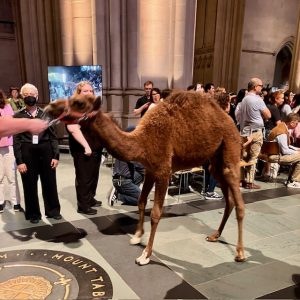
The formal procession of the animals included a huge horse of the Clydesdale variety, a very big snake, an owl, a bird that may have been a falcon, a calf, a small donkey, a llama, goats, a sheep, a smallish camel and others.


After the service people went to designated areas in the Cathedral’s gardens for blessing personal animals. There was an area for pet portraits and booths from different organizations including Muddy Paws that helps dogs get adopted.

Happily, I saw only one cat in costume although walking past Petco at Union Square recently, I noted aisles of Halloween costumes for animals. Sake, my cat, wouldn’t take well to a costume or a visit to the Cathedral.

No thanks


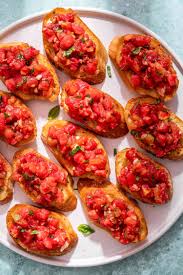
St. Francis is associated with almond cookies as he supposedly asked for them on his deathbed. He lived in Assisi in Umbria and so would have eaten simple food of the area. Instead of cookies  this is a recipe for bruschetta  (‘brusketta’ ), a classic.

1 baguette, sliced into 1/2-inch thick pieces

2-3 tablespoons extra-virgin olive oil, plus more for drizzling

1 clove garlic, halved (I’d probably use less but most cooks would stick with this.)

4-6 plum or roma tomatoes, diced

1/4 cup fresh basil leaves, chopped

1-2 cloves garlic, minced

1/2 tablespoon balsamic vinegar (optional)

Salt and freshly ground black pepper, to taste

In a medium bowl, combine the diced tomatoes, chopped basil, minced garlic, 1–2 tablespoons of olive oil, and balsamic vinegar (if using). Season with salt and pepper. Stir gently to combine and set aside to let the flavors marinate. For the best flavor, let it sit for at least 30 minutes.

Preheat oven to 400°F Arrange baguette slices on a baking sheet and brush each slice with olive oil. Bake for 5 to 10 minutes, or until golden brown and lightly toasted.

Remove  toasted bread from oven and  while still warm, rub the cut side of a raw, halved garlic clove over the surface of each slice.

Just before serving, spoon tomato mixture generously onto each slice of garlic-rubbed bread. Sprinkle with flaky salt. Serve immediately to ensure the bread stays crisp.

If you like the TV series, All Creatures Great and Small, watch an episode. St. F. would approve. Pat your dog or cat or whistle to your bird.

St, Francis in the Desert

This painting by Giovanni Bellini, Saint Francis in the Desert,  is in the NYC Frick Collection. Visit if you can. If not, look at it and see how it makes you feel.


Posted in Uncategorized | 2 Comments

Lively Lyon: Eight Food and Museum-Filled Days

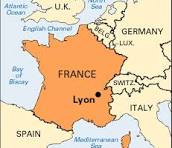
In early September I went to Lyon, France with a friend. After meeting in Paris we took the TGV (high speed train) to Lyon, a roughly two-hour trip. We collected the key and located our rented apartment, a modest, comfortable two-bedroom, one bath with a small kitchen in a very convenient area.

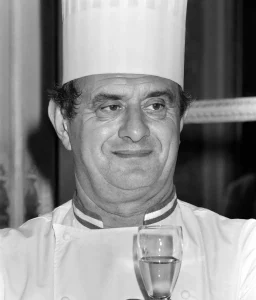
Paul Bocuse in full toque

Lyon, population about 1.5 million, is often called the gastronomic capital of France because many famous chefs, among them Paul Bocuse and the Mères Lyonnaises, mostly nineteenth-century talented women cooks, worked there and because the city is close to local sources of outstanding poultry, fish, vegetables and fruits. That said, I found many of the traditional dishes too rich and heavy, often weighed down by sauce. I’ve had a better salad Lyonnaise (greens, smoky bacon, croutons, and poached eggs with a vinaigrette dressing) in New York but, in fairness, the restaurant I ate it at in Lyon was nothing special.


I admit to the superiority of the poulet de Bresse, which has very juicy meat and really tastes like chicken. One night for a cheese course I ordered cervelle de Canut, (literally silk workers’ brains). What I got was a pot of vinegary white cheese dotted with chives which was interesting but pretty terrible.

Supposed to look like brains? Really?

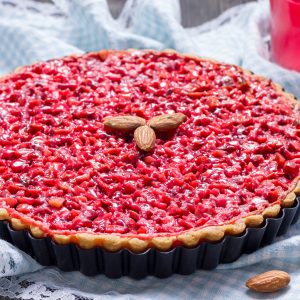
To my taste, the celebrated tarte au pralines, a Lyonnaise specialty, is  better to look at than eat.  (American pralines, associated with New Orleans, are made of pecans, butter, milk and sugar. The Lyonnaise version

Lyonnaise praline tarte

is made from almonds coated multiple times in a vibrant pink, caramelized sugar syrup.) However, that pastry is one among a gazillion fabulous offerings at the many pastry shops. There are also lots of places to enjoy fabulous ice cream, gelato and chocolate.  We did not suffer from lack of sweets.

As Lyon was the silk capital of the world beginning in the 16th century  there are several museums devoted to silk workers and weaving. Silk goods —scarves, shawls, neckties — are for sale all over but I passed as prices were high and nothing was sufficiently tempting. There are lots of other museums featuring painting, puppetry, film, anthropology and more.

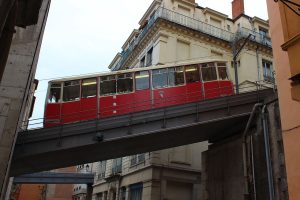
We walked a lot in addition to taking a funicular from the old part of Lyon, (Vieux Lyon, full of tourists) up to the white Basilica of Notre-Dame de Fourvière  that overlooks the city. We also rode busses and took the tram out to the terrific-looking, contemporary Musee de Confluences. Public transportation is clean, easy to navigate and requires only a credit card.
 

As Lyon is set between the Saone and Rhone rivers, I was surprised that there are no boats like the Bateaux Mouches in Paris. (There is one large boat which didn’t look appealing.) The riverbanks do offer beautiful views, food, book and flower markets and the chance to watch the locals at play like the boys who work on their skateboard or scooter routines

It’s a charming city with lots to do, see and eat.

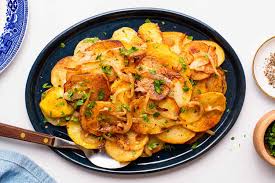
We didn’t enjoy these wonderful potatoes while in Lyon but my grandmother used to serve them. Probably because I’m too impatient I can never get the bottom layer as deeply brown as I’d like.

Potatoes Lyonnaise


  • 1 1/2 pounds  Yukon Gold potatoes (about 4 medium potatoes), peeled and cut into 1/4-inch-thick rounds
  • 2 tablespoons kosher salt, plus more to taste
  • 2 tablespoons  white vinegar
  • 5 tablespoons melted butter
  • 1 large sweet onion thinly sliced
  • Freshly ground black pepper
  • Finely chopped flat-leaf parsley leaves  for garnish

Put potatoes with salt under enough water to cover by about an inch. Bring to boil, reduce heat and simmer uncovered about four minutes.

While potatoes boil, heat 1 Tbls oil in large cast iron skillet. Add onions and cook, stirring often until golden brown (Recipe says this takes 12-14 minutes. My experience is more like one-half hour to get them really dark brown.) When done put in bowl, set aside.

Add 2 more Tbls. oil to the skillet, raise the heat to medium  and arrange half of the potatoes inside in a single layer (careful, they may sputter). Sprinkle with salt and pepper and cook, undisturbed, until the bottoms are golden brown, about 5 minutes. Flip and cook the other side under golden brown, about 5 more minutes.

Remove the cooked potatoes to a serving platter. Top with half of the cooked onions and half of the parsley, tent loosely with foil, and set aside.

Add remaining 2 Tbls. butter to now-empty skillet and repeat with remaining potatoes. Return reserved potatoes and onions to skillet, toss to combine, and cook until heated through, about 1 minute. Season with salt and pepper to taste.

Put on serving platter and serve hot. These potatoes can keep overnight but will lose some of their crispness. If you’re going to the trouble of making them best serve hot.

Potatoes Lyonnaise make a wonderful side dish with almost anything. Toss on a silk scarf and hum the Marseillaise when you serve.


Posted in Uncategorized | Comments Off on Lively Lyon: Eight Food and Museum-Filled Days

Peacock Football Field

The original Waldorf- Astoria hotel at Fifth Avenue and 33rd Street was built in 1893 and torn down in 1929 to make room to build the Empire State Building. That  Waldorf Hotel was on the site where millionaire developer William Waldorf Astor had previously built his mansion. The Astoria Hotel opened in 1897 on the southwest corner of Fifth Avenue and 34th Street, next door to the Waldorf. The two hotels were connected by the 980-foot-long corridor known as “Peacock Alley” after they merged in 1897.

And all that palaver, dear reader, brings me to my point. Inspired by a gushing New York Times article on said Peacock Alley (https://www.nytimes.com/2013/03/07/booming/peacock-alley-a-bar-that-lives-up-to-its-name-and-setting.html), a friend and I recently met there for a drink.

I don’t know what the Times reporter drank but obviously it was more inspiring than our ginger beers.  The article calls the place fit for a “quiet drink.” We were there on an ordinary Tuesday night when it was anything but quiet as surfaces are hard, the place is enormous and starting precisely at five PM, the already intrusive canned music was augmented by a man playing the piano. The reporter also calls it “a contemporary, comfortable place.”

True, the chairs are comfortable, the service is impeccable and I can’t address the quality of the drinks because I didn’t have one. However, the space felt more football field than alley.  The ceilings are so high they reduced me to a dot; there are hostesses in sparkly gold dresses and the only connection to peacocks is the color of the waiter’s jackets.

Somehow I don’t see this as cozy or intimate.

The article also reports on seeing “many suits, not many jeans”—we saw some men in suits and plenty in shorts and baseball caps.  The entire hotel is a mass of huge spaces with one huge entryway flowing into another. I’m sure the owners have ample insurance and may need it because the polished, cream-colored marble stairs are practically an invitation to fall.  When I entered via the Lexington Avenue side, I asked the way to reception where my friend and I had agreed to meet. “Up the stairs” said my helper, with no suggestion that an elevator was around somewhere.

Here’s a real digression: when I think peacock, I flash back to “peacacocka, “ a funny (but maybe you had to be there) incident on one of many trips Joel, my husband, and I took to Japan. We somehow attached ourselves to a Japanese group that boarded a boat for a ride on the Inland Sea, stopping at an island that had an historical connection with Greece. At one point we were led to an area where on the hour peacocks were released from a hillside opening to a recording of the 1812 Overture. Our guide, as limited in her English as we were in Japanese, referred to the birds as “peacacoka.” This stuck.


However, I would be remiss if I didn’t include a recipe for Waldorf Salad, a staple of my childhood. Whether or not this was originated by the famed chef, Oscar of the Waldorf, is anyone’s guess

                                             Waldorf Salad


Serves 6

  • 1 teaspoon lemon juice
  • ⅛ teaspoon salt
  • 3 apples — peeled, cored, and chopped
  • 1 cup thinly sliced celery
  • ½ cup chopped walnuts
  • ½ cup raisins (recipe says these are optional. If you want something along those lines, I suggest dried cranberries.)

Whisk mayonnaise, sugar, lemon juice, and salt together in a serving bowl. Stir in apples, celery, walnuts, and raisins. Cover and chill in the refrigerator. Remove to let it warm up and bring out the flavor about one-half hour before serving.

Drink if you wish, to Oscar. Visit the newly renovated Waldorf and enjoy a cocktail at Peacock Alley. Let me know how you feel about it.

Posted in Uncategorized | Tagged , , , | 1 Comment

By the shores of Gitche Gumee…

If ever again I plan to travel over the July 4th weekend please lock me up. Too many people have the same idea. That said, the five days I spent in Portland, Maine July 3-7 were interesting and for the most part crowds didn’t get in the way.

Born in 1807, in Portland (while Maine was still a part of Massachusetts), Henry Wadsworth Longfellow left his stamp on many places.

Henry Wadsworth Longfellow

There’s the very chic Hotel Longfellow where guests all appeared to be under forty with many dressed for a Ralph Lauren ad; a square with Henry’s  monument and the beautifully restored Wadsworth-Longfellow House,  the oldest standing brick structure on the Portland peninsula that was designated a National Historic Landmark in 1962.


The house’s garden is lovely; the Maine Historical Society is adjacent with a quilt exhibit and one of Maine true crime ranging from Stephen King to Murder She Wrote. I have a

At work in Cabot Cove

soft spot for Cabot Cove because I always had one for Angela Lansbury.  There are reports of sensational true crime events that took place in Maine many reported in local newspapers with tiny print because printing was expensive and small print put more words on each page.


Dinner at Central Provisions was a 10+. The restaurant serves small plates like bluefin tuna crudo with matchstick bits of daikon and fried shallots. If this place was in New York I’d visit regularly.  Another night elsewhere I had steamers. My friend had a lobster roll at the Inn on Peaks, an island in Casco Bay accessible by (crowded) ferry, I went for the fish tacos.

The large, modernist Portland Art Museum exhibits contemporary works and includes sections for Native American and Northwest Art. If legal drugs beckon there are several shops that sell pot including Hidden Grounds, a coffee spot up front and a dispensary in the rear for those over twenty-one.

The huge, beautifully maintained Fort Williams Park is home to the Portland Head Light, the oldest lighthouse in Maine. The lighthouse keeper’s cottage is now a museum, worth the $2 entrance fee with Fresnel lenses, photos of famous shipwrecks of yore and info on the lives of   keepers and their beleaguered wives.


Here’s a recipe for—what else?— Classic New England Lobster Rolls

Recipe and photo: Sally Vargas

  • 1 pound cooked lobster meat, cut into 1-inch pieces
  • 3 tablespoons lemon juice
  • 1/4 teaspoon salt
  • 1/8 teaspoon black pepper
  • 1/2 cup finely chopped celery
  • 1/3 cup mayonnaise

For the buns:

  • 4 to 6 New England style split-top hot dog buns
  • 2 to 3 tablespoons soft butter

Make the lobster salad:

In a bowl, stir lobster meat, lemon juice, salt, pepper, celery, and mayonnaise together. Add more salt, pepper, or lemon juice, to taste.

Spread the outsides of the buns with softened butter. Set a skillet or cast iron pan over medium-high heat and toast buns about 30 seconds on each side, or until golden brown.

Fill buns with lobster salad, take out a second mortgage and chow down.  You can play Rudee Vallee singing The Maine Stein Song if you like.

Posted in Uncategorized | 4 Comments

The Bard and the Phil

Possibly because Mother N. sent so much chill and rain in May, these outdoor events were greeted with special delight.

Much Ado in Rehearsal

On Tuesday, June 3, The Public Theater’s Mobil Unit presented Shakespeare’s Much Ado About Nothing in front of the downtown side of the NY Public Library. The work was completely bilingual and even though my Spanish is limited (an understatement) every word needed to follow was clear (although there were some Spanish idioms that brought guffaws from those in the know.) The cast was terrific, the added music and dancing inspired and the minimal set worked well. Even the passing traffic on Fifth Avenue wasn’t terribly annoying.

Wednesday night brought the NY Philharmonic to Central Park’s Great Lawn. I’ve been there for many years and never saw the space so crowded.  A friend and I dined on crudities, fried chicken and cole slaw followed by cherries and biscotti.  Gustave Dudamel, about to become the orchestra’s director,  conducted works by Tchaikovsky, Stravinsky, and soloists Arturo Sandoval and Gonzalo Grau.  A half-moon hung in the sky and the only thing that gave me less than total enjoyment was the absence of a chair—entirely my fault.

Among the many pleasures of living in New York are first class experiences like these—free in the bargain. I don’t want to rant but issues with the possible cessation of funding for arts organizations makes me furious. I bet I’m not alone.

I won’t suggest anyone make fried chicken, a messy undertaking, calories be damned. Instead here’s a recipe for a slightly unusual sandwich that improves as it sits.

Tomato Basil and Artichoke Sandwich – courtesy Love and Lemons, Jeanine Donofrio

Basil-Edamame Spread: (this makes extra)

  • 1½ cups edamame
  • ¼ cup basil
  • 3 tablespoons fresh lemon juice
  • 1 tablespoon chopped scallions
  • ½ small garlic clove (or not)
  • 2 tablespoons olive oil
  • 1 to 3 tablespoons water
  • ½ teaspoon sea salt, more to taste

for the sandwiches:

  • 1 large baguette
  • handful of baby salad greens (or arugula)
  • 2-3 medium tomatoes, sliced (worth the effort to find and use ripe tomatoes)
  • 10 basil leaves
  • 10 jarred roasted artichokes, cut into quarters or roughly chopped
  • pine nuts, optional

Put edamame, basil, lemon juice, scallions, garlic if using, and sea salt into bowl of  food processor. Pulse until chopped. Add olive oil and blend until smooth. Add up to 3 tablespoons of water to create a smooth, spreadable consistency. Season to taste and chill until ready to use. (Filling can be in advance and stored in the fridge for 3 to 4 days.)

Slice one baguette in half and assemble with the basil-edamame spread, greens, tomatoes, basil, artichokes and pine nuts. Close baguette, wrap in foil and put in the fridge until you’re ready to divide. Slice into 4 servings.

Drink anything from wine to Diet Snapple. Try not to applaud during movements of a symphony, save it for the end. If you want to talk, perhaps just meet your friend and skip the concert. If your dog freaks during fireworks considering keeping him or her at home. Be kind to your neighbors on adjacent blankets; yes, it’s crowded and we all do the best we can with limited space

Posted in Uncategorized | Tagged , , | 1 Comment

Catwalk

May 2-4, 2025 was this year’s celebration of renowned city planner, Jane Jacobs. During the weekend the Municipal Arts Society organizes a series of walking tours known as Jane’s Walks. On Friday afternoon, I joined Historic Brooklyn Heights for Cat Lovers, arriving at Walk Whitman Park a little late after dealing with the irascible subway.

Tour leader Peggy G. wore a cat hat and furry tail. (She owns three cats. Other members of our fifteen-person group each had one.) Peggy led us around Brooklyn Heights, designed as America’s First Suburb.

The group stopped at 64 Poplar Street where Walt Whitman lived and wrote Leaves of Grass, minus any cat association. (Also minus much charm; although the area has many lovely houses, Walt’s isn’t among them.)

Peggy carried a book of photos to help with context, displaying a picture of Shato Lizzie, a cat who was the official mascot of TWA and flew “all over performing in cat shows.” (Performing is something my cat, Sake, doesn’t do unless you count running through a cat tunnel when she feels like it as a performance.)


In front of the Plymouth Church is a statue of Henry Ward Beecher, father of Harriet Beecher Stow of Uncle Tom’s Cabin fame.  The story goes that Henry responded to a letter from a young boy forced to give up his beloved tabby and rescued the animal.

Henry Ward Beecher


Truman Capote lived at 70 Willow Street while writing Breakfast at Tiffany’s and In Cold Blood. A cat fancier, Capote had several.

We walked the lovely Promenade in full bloom and ended up at Borough Hall where Peggy described the work of Jerry Fox, a blind cat who wore glasses and prevented the building from burning down by meowing frantically to summon help.

Given glorious weather and a fondness for both cats and lovely neighborhoods, the tour was a success.  Anna Wintour did not grace the scene.

Now to a recipe and not for kitty chow.

Chicken Cacciatore (say it aloud to hear the cat ref)

4 chicken thighs

2 chicken breasts with skin and backbone, halved crosswise

2 teaspoons salt, plus more to taste

1 teaspoon freshly ground black pepper, plus more to taste

1/2 cup all purpose flour, for dredging

3 tablespoons olive oil

1 large red bell pepper, chopped

1 onion, chopped

3 garlic cloves, finely chopped

3/4 cup dry white wine

1 (28-ounce) can diced tomatoes with juice

3/4 cup reduced-sodium chicken broth

3 tablespoons drained capers

1 1/2 teaspoons dried oregano leaves

1/4 cup coarsely chopped fresh basil leaves (if you use dried, the kitchen police will not notice)

Sprinkle the chicken pieces with 1 teaspoon of each salt and pepper. Dredge the chicken pieces in the flour to coat lightly. (Dredge= put the flour in a plastic bag. Put the chicken in the bag and shake for a bit)

In a large heavy saute pan, heat the oil over a medium-high flame. Add the chicken pieces to the pan and saute just until brown, about 5 minutes per side. If all the chicken does not fit in the pan, saute it in 2 batches. Transfer the chicken to a plate and set aside. Add the bell pepper, onion and garlic to the same pan and saute over medium heat until the onion is tender, about 5 minutes. Season with salt and pepper. Add the wine and simmer until reduced by half, about 3 minutes. Add the tomatoes with their juice, broth, capers and oregano. Return the chicken pieces to the pan and turn them to coat in the sauce. Bring the sauce to a simmer. Continue simmering over medium-low heat until the chicken is just cooked through, about 30 minutes for the breast pieces, and 20 minutes for the thighs.

Using tongs, transfer the chicken to a platter. If necessary, boil the sauce until it thickens slightly, about 3 minutes. Spoon off any excess fat from atop the sauce. Spoon the sauce over the chicken, then sprinkle with the basil and serve.

Hum What’s New Pussycat.  Think and dismiss the idea of moving to Brooklyn Heights.

Posted in Uncategorized | 2 Comments

It’s a Wash

One of the first things a beginning watercolorist learns is how to make a wash. A wash is a technique where diluted paint is applied to the paper and can be flat, graded, or variegated. Sometimes different washes are built up one on top of the other. It’s harder than it looks.

As I’ve been studying watercolor for about seven years, I go to the annual exhibit at the Salamagundi Club, (not for those with walking issues; steep stairs throughout), of the American Watercolor Society.

Typically at the AWS show there are a great many representational works, often long on technique but short on feeling. As my instructor often says, “If you want your painting to look exactly like the subject, take a photo.” These baseballs are amazingly realistic but, to my mind, lack heart.


The exhibit has many paintings of Venice, flowers, and bicycles. Some of the portraits capture what appears to be the subject’s essence, and some landscapes do a good job of evoking, but not precisely delineating, the setting.

Contributors come from all over the U.S. and other countries including China, Peru and my particular fave, Wormit, Fife. Great Britain, where the artist painted the exterior of a dilapidated cottage.

I began painting to give some energy to the right side of my brain. Here is a fairly recent example.

I  won’t be taking up a new career but I enjoy my painting sessions enormously.s

This is a recipe that requires almost no cleanup, aka, washing.


Lemon Dill Salmon

  • 1 tablespoon butter, softened
  • 4 salmon fillets (6 ounces each)
  • 1/2 teaspoon salt
  • 1/4 teaspoon pepper
  • 1/2 medium onion, sliced
  • 4 garlic cloves, sliced (I will omit)
  • 4 fresh dill sprigs (bah, humbug, sprinkle some dried dill)
  • 1 tablespoon minced fresh basil (see above)
  • 1 medium lemon, sliced into circles oven to 35

Tear four pieces of foil, each about a foot square. Spread butter in the center of each. Place 1 salmon fillet in the center of each; sprinkle with salt and pepper. Top with onion, garlic if using, dill, basil and lemon. Fold foil around each fillet and seal.Place packets on a sheet pan in the oven. Cook until fish just begins to flake easily with a fork, 8-10 minutes. Open carefully to allow steam to escape.

During cocktail hour preceding dinner, listen to Nat King Cole croon Mona Lisa

https://www.youtube.com/watch?v=G2vgJ0MGOlg

Posted in Uncategorized | Tagged , , , | Comments Off on It’s a Wash

Bits and Pieces

Here is a link to a recently published article on my trip to Cuba in February, 2025.

https://www.goworldtravel.com/traveling-to-cuba/

and a link to a review of All the Beauty in the World,  currently playing at the DR2 Theater in New York:


More Than the Eye of the Beholder


Posted in Uncategorized | Comments Off on Bits and Pieces